24 July 2026
Kashrut
Kashrut, the Jewish dietary tradition, shapes not only what Jews eat but also how food is prepared, served, and shared. More than a set of dietary rules, it transforms the everyday act of eating into a conscious expression of faith, discipline, and respect for life. Through kashrut, the dining table becomes a place where spirituality is lived every day.
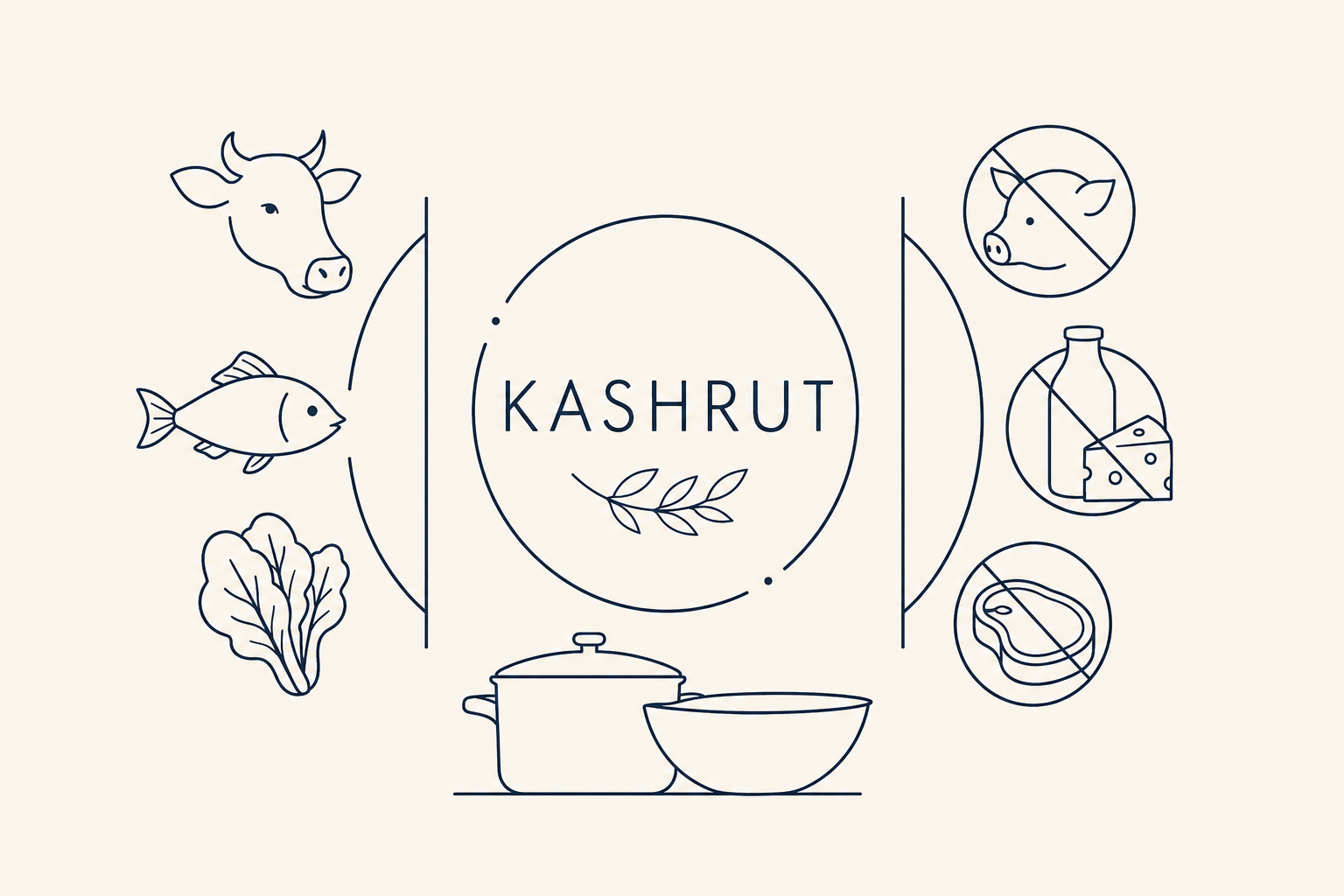
Kashrut is the body of Jewish dietary laws that defines which foods are kosher—meaning “fit” or “appropriate” for consumption according to the Torah. Rooted in the biblical books of Leviticus and Deuteronomy and developed through centuries of rabbinic tradition, kashrut governs not only which foods may be eaten but also how they are prepared, combined, and served.
Only certain animals are permitted, including mammals that both chew the cud and have split hooves, fish with fins and scales, and specific species of birds. Kosher meat must come from animals slaughtered according to shechitah, a carefully regulated ritual process, and the consumption of blood is prohibited. One of the best-known principles of kashrut is the complete separation of meat and dairy foods, requiring separate utensils, cookware, and, in many households, even separate kitchens or sinks. Fruits, vegetables, and grains are generally considered kosher, but processed foods require reliable kosher certification to ensure that all ingredients and preparation methods comply with Jewish law.
For thousands of years, kashrut has been a defining feature of Jewish identity. Rather than viewing eating as a purely physical necessity, Judaism understands every meal as an opportunity to practice mindfulness, gratitude, and holiness. By observing kashrut, ordinary daily life becomes a continuous expression of spiritual values and belonging.