6 July 2026
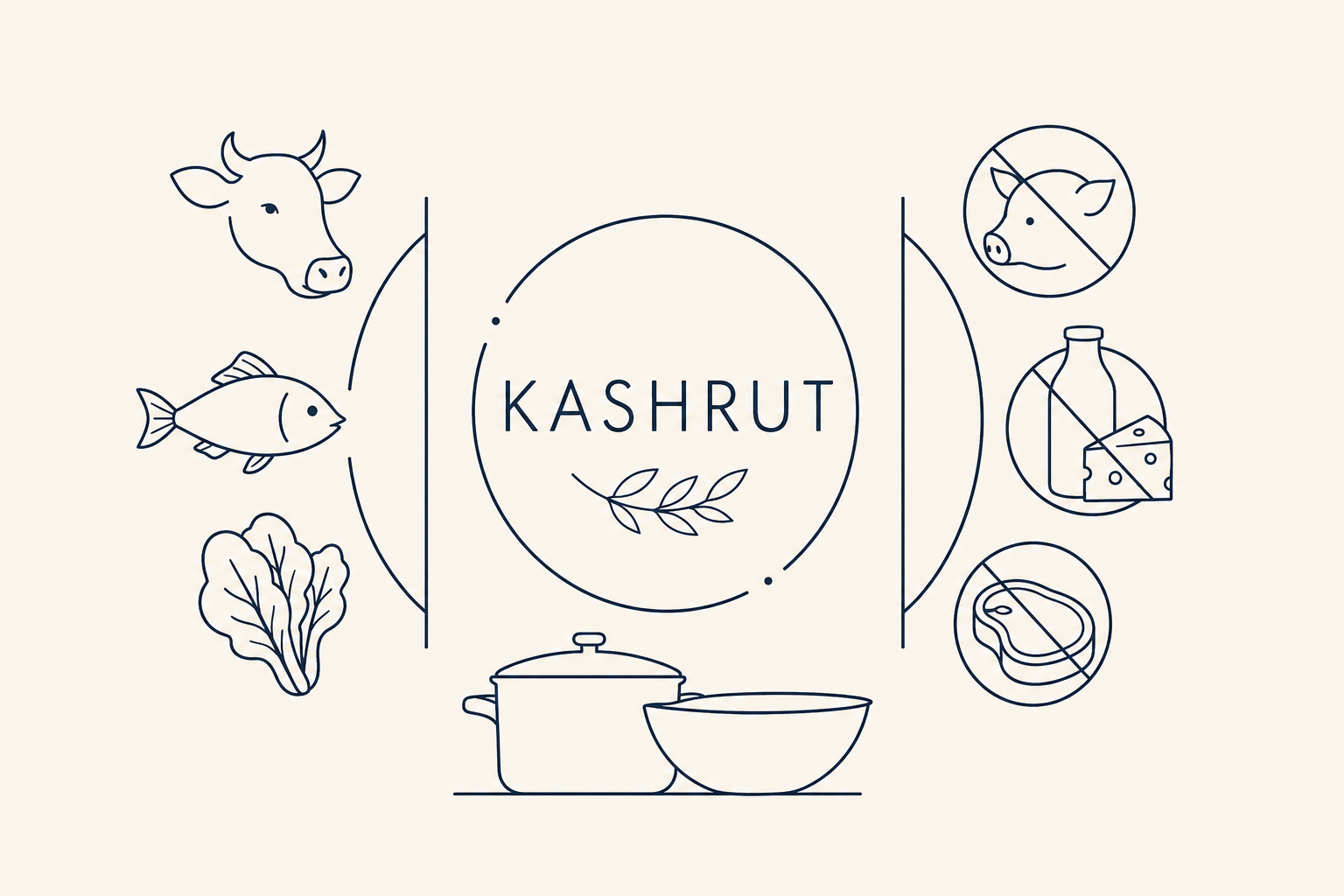
kashrut-the Jewish dietary laws
The familiar saying, “You are what you eat,” suggests that our food choices reflect who we are. In Judaism, this idea is expressed through the laws of kashrut. Although many people today see these dietary laws as outdated, Jewish tradition invites us to reconsider their deeper purpose and what they reveal about Jewish identity and values.
The dietary laws presented in Judaism are often understood as rules about what may or may not be eaten, but their deeper purpose is not health or nutrition. The Torah describes these practices as part of Israel’s path to holiness: “For you are a people consecrated to the Lord your God” (Deut. 14:21). Foods declared *tamei* (“ritually impure”) are prohibited specifically for the Jewish people, highlighting that *kashrut* is about covenant and identity rather than universal dietary principles.
More than a list of prohibitions, *kashrut* is a spiritual discipline rooted in everyday life. Because eating is a daily necessity and often a shared experience, it transforms ordinary moments into opportunities for mindfulness, gratitude, and connection with Jewish tradition. Blessings before and after meals, conscious food choices, and acts of charity associated with eating remind us that spirituality extends far beyond the synagogue into the rhythms of daily life.
Today, many Jews also understand *kashrut* through an ethical lens, considering environmental sustainability, fair labour practices, and animal welfare alongside traditional observance. In this way, the ancient laws of *kashrut* continue to inspire intentional living, reminding us that even the most ordinary act of eating can become an expression of holiness, responsibility, and Jewish identity.
Bibliography / Sources
https://encyclopedia.yivo.org/article/2098