13 May 2026
Yiddish Death Ballads
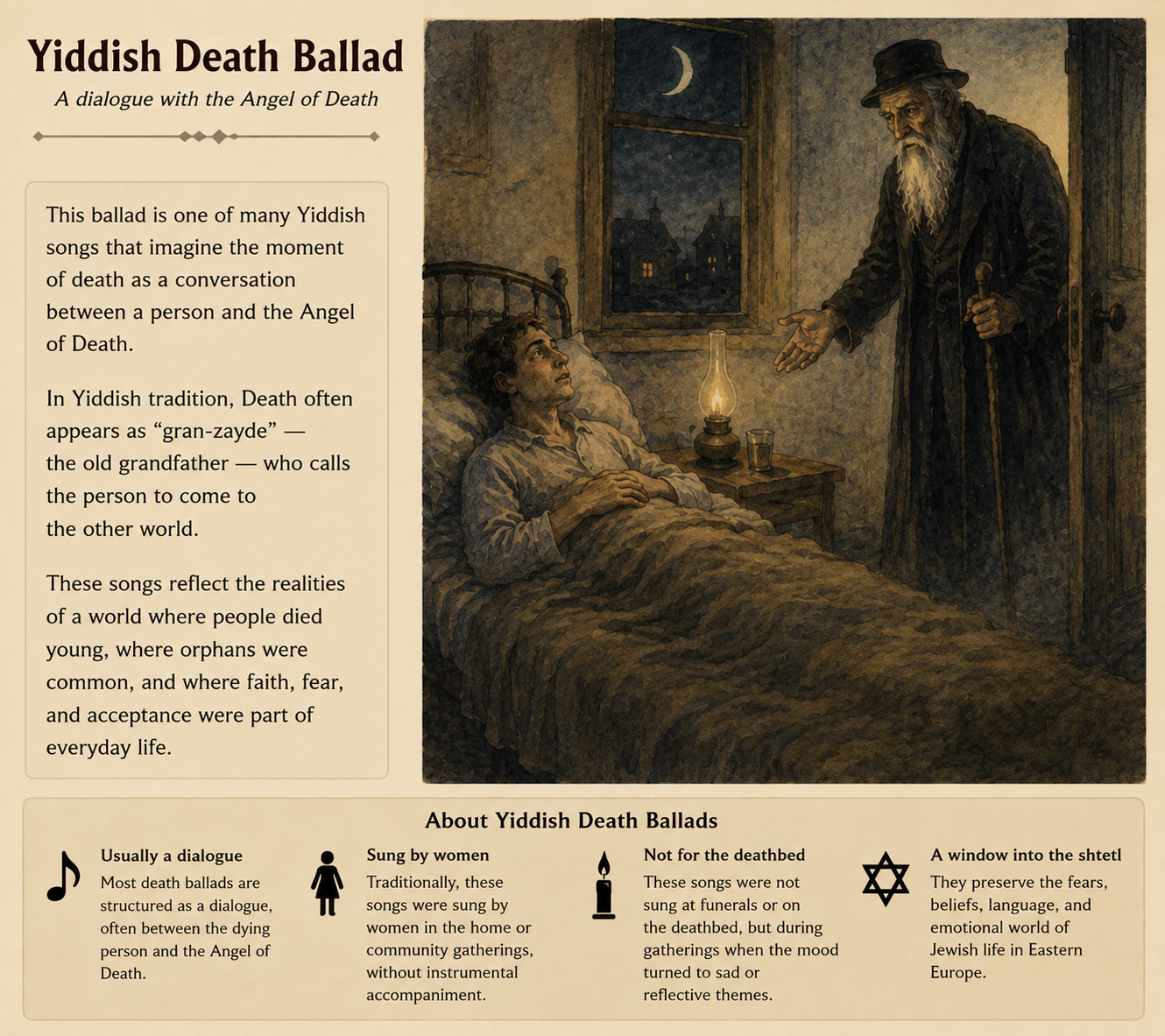
Death ballads form an important part of Yiddish folk song tradition and reveal how Jewish communities in Eastern Europe reflected on mortality, loss, and human vulnerability. These songs are usually structured as dramatic dialogues, often between a dying person and the Angel of Death. In many Yiddish ballads, death appears not as a frightening monster, but as gran-zayde — an old grandfatherly figure calling the dying person to “come to the other world.” This image differs from traditional religious ideas and reflects the blending of Jewish and surrounding Eastern European folk beliefs.
Unlike lyrical love songs that focus on emotion, death ballads center on a single dramatic moment, making them especially powerful and memorable. Traditionally, these songs were sung without instrumental accompaniment, most often by women within the family or community setting. They were not performed at funerals or deathbeds, but rather sung during gatherings when the mood turned reflective or sorrowful.
These songs also reflect the hardships of shtetl life: poverty, orphanhood, early death, and social isolation. Through them, Yiddish folk culture preserved the emotional realities of everyday Jewish life and gave voice to experiences often absent from written history.