15 May 2026
Havruta: Learning in Pairs
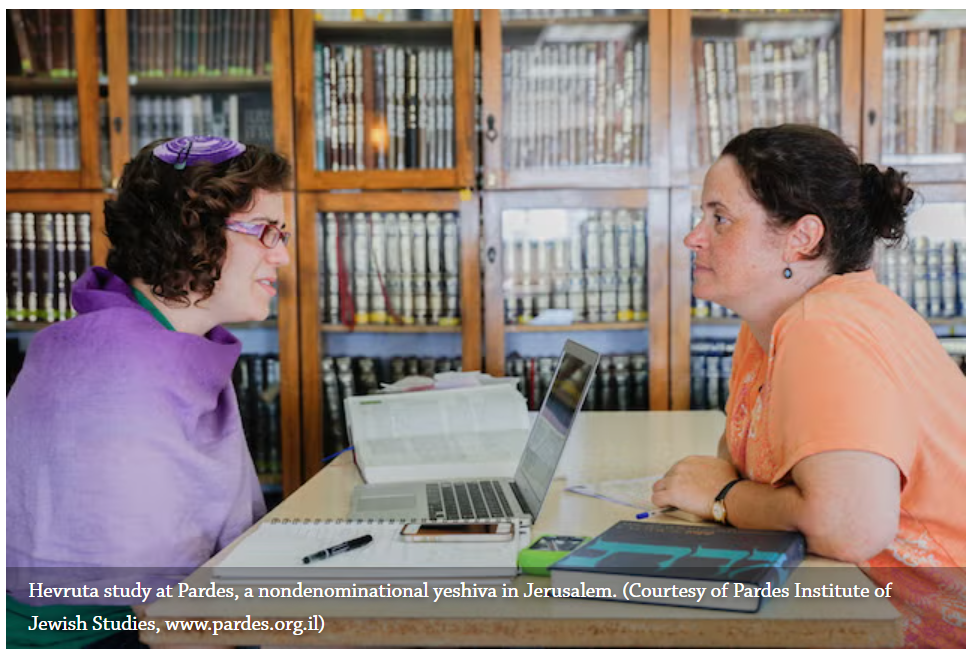
A hevruta often studies in the beit midrash, or study hall, alongside other pairs of learners. Together, these havrutot (plural of hevruta) create the unique atmosphere of the beit midrash, filled with the sounds of discussion, questioning, and debate.
Study in hevruta became an essential part of Jewish tradition because Jewish learning has long emphasized studying with others, whether with teachers or fellow students. Historical research suggests, however, that paired learning as the dominant form of study only became widespread in the last century.
Some of the earliest references to group and paired learning appear in the Talmud. The Talmud teaches that the Torah is truly acquired through a group, or haburah (Babylonian Talmud, Berakhot 63b). The word haburah comes from the same Hebrew root as hevruta — haver, meaning “friend.” The Talmud also praises study in pairs, stating that “Two scholars sharpen one another” (Babylonian Talmud, Ta’anit 7a), meaning that through discussion and debate, each partner deepens and refines the other’s understanding of the text.