23 March 2026
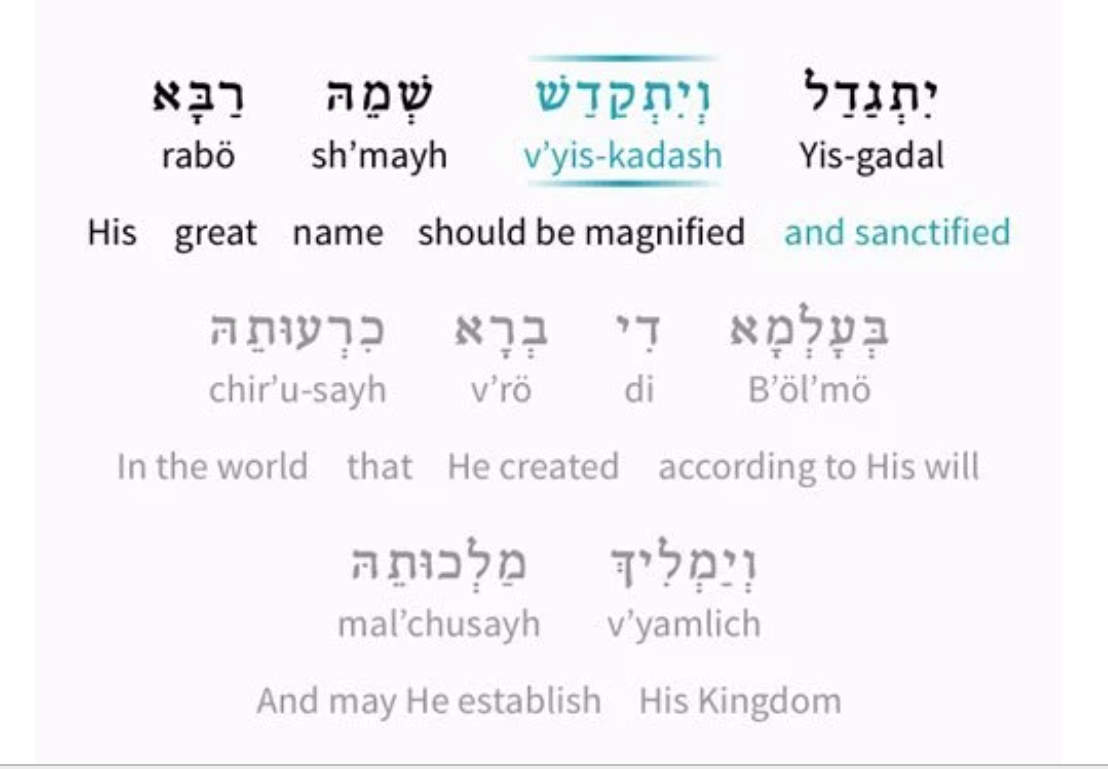
The mourners Kaddish
If a parent insists on the child’s reciting Kaddish for the full 12 months, there is surely no reason not to obey him. If children feel this might bring public dishonor to their parent, they should recite only the Rabbi’s Kaddish in the twelfth month, despite his request. This is a practice worthwhile encouraging in every case for all parents. The 11-months-minus-one-day are calculated from day of death. However, if one wishes to count from the day of burial, if burial occurred many days after death, he may do so. On the last day of Kaddish recitation, the mourner should receive an aliyah, a Torah honor. Kaddish for relatives other than parents, for whom one is obliged to mourn: son, daughter, brother, sister, and spouse-is recited for 30 days according to the custom in some areas. The Kaddish is to be recited only in the presence of a duly-constituted quorum which consists of 10 males (including mourners) above the age of Bar Mitzvah. While the Kaddish is an intensely personal tribute spoken in respect to one’s own parents, it may not be said privately. And while it is true that the individual is accorded great value in Jewish ethics, this service of holiness must be recited only in public, eliciting the response of a congregation. The Jewish experience has taught that such values as peace and life, and the struggle to bring heaven down to earth, of which the Kaddish speaks, can be achieved only in concert with society, and proclaimed amidst friends and neighbors.