2 February 2026
The Custom of erecting a matzebah (Jewish Tombstone) in Eastern Europe
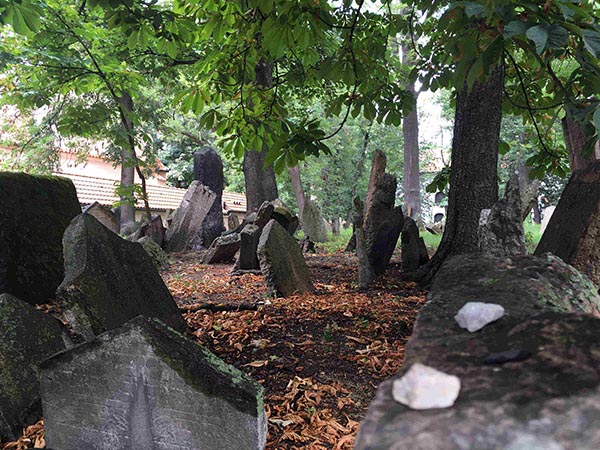
Following an Ashkenazic tradition developed between the eleventh and fourteenth centuries, tombstones were typically placed vertically as rectangular slabs with a prominent inscription field. In exceptional cases, such as for revered rabbis or scholars, an ohel—a small structure resembling a tent—was built over the grave.
Historically, the most common material for matzebot was wood, shaped as planks with painted or carved inscriptions. Because wood deteriorates easily, few examples survive. Most preserved tombstones are carved from stone, which was costly and therefore more typical of wealthier families. Later materials included cast iron in the nineteenth and early twentieth centuries and artificial stone, such as concrete or terrazzo, in the twentieth century. Many early tombstones were originally painted, though little of this decoration remains.
Inscriptions were traditionally engraved in Hebrew using square script. Early stones were simple, but from the sixteenth century onward they became increasingly elaborate, incorporating Renaissance and Baroque architectural motifs such as arches, pediments, and columns. A rich symbolic vocabulary developed, including lions, crowns, pitchers and bowls for Levites, professional emblems, and family symbols. These carvings transformed the matzebah into both a memorial and a visual expression of religious belief, social identity, and artistic tradition.