7 July 2026
Careful Congratulations-an ethical custom
If a friend buys a beautiful new pair of leather shoes, Jewish tradition encourages a thoughtful choice of words when offering congratulations. Rather than wishing them to “wear them out and get a new pair,” some avoid this expression because it implies the unnecessary use of another animal’s life. Instead, the custom reflects the Jewish value of compassion toward all living creatures, echoing the teaching that “God’s mercy is upon all His creations.” But there is no prohibition on wearing them.
Jewish tradition places great emphasis on the humane treatment of animals through the principle of tza’ar ba’alei chayim—the prohibition against causing unnecessary suffering to living creatures. The Torah commands compassion toward animals, requiring, for example, that working animals be cared for and fed before their owners eat. At the same time, Judaism recognizes that humans may use animals for legitimate needs such as food, clothing, work, medicine, and scientific research, provided unnecessary pain is avoided. This balance reflects the belief that every creature has intrinsic value and a divinely ordained purpose, while humanity bears responsibility for using creation ethically. Consequently, practices such as kosher slaughter are permitted because they aim to minimize suffering, whereas hunting for sport is widely discouraged as needless cruelty. Jewish law also permits killing pests or dangerous animals when necessary to protect human health and safety, but encourages doing so in the least harmful way possible. Beyond legal requirements, many Jewish sages advocated an even greater sensitivity toward all living beings, avoiding harm whenever possible. These teachings reflect a broader ethical vision in which compassion for animals is understood not only as concern for their welfare but also as a means of cultivating kindness, humility, and moral responsibility in human beings.
Risk of disappearing
This tradition is gradually disappearing because its ethical symbolism is no longer widely recognized, and many people are unaware that Jewish custom associates everyday expressions with values of compassion and respect for animal life. In less observant communities, such nuanced customs are rarely taught or practiced, while changing patterns of consumption and the widespread use of standardized congratulatory expressions have further diminished awareness of this distinctive tradition.
Bibliography / Sources
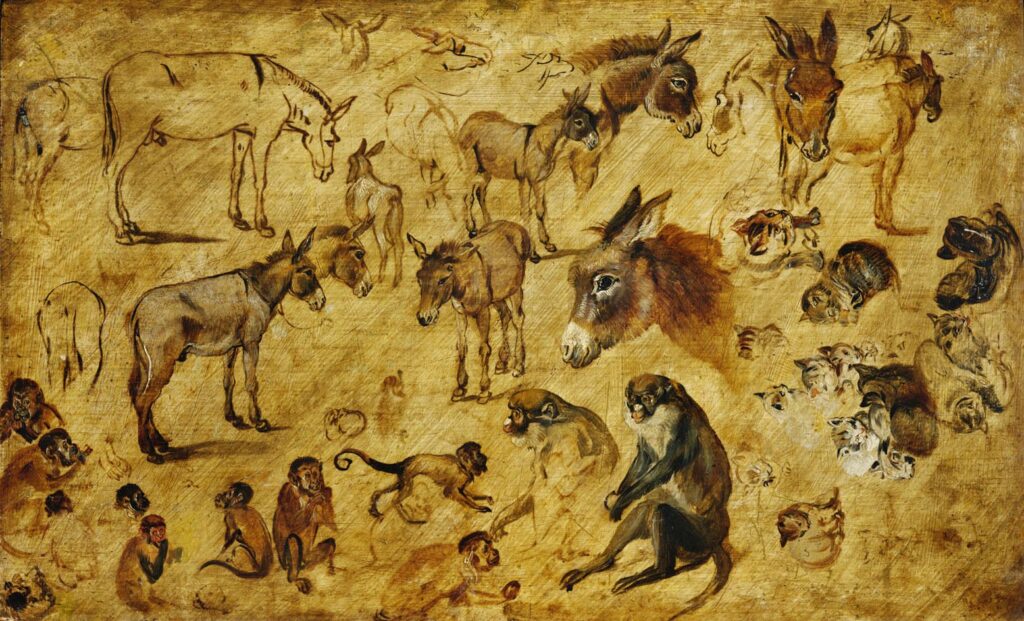
Jan Brueghel the Elder (1568-1625), Studies of animals (donkeys, cats and monkeys), color on
oak wood, 34,2 x 55,5 cm, Kunsthistorisches Museum Wien, Public domain, via Wikimedia Commons
https://www.chabad.org/theJewishWoman/article_cdo/aid/4065187/jewish/9-Ways-Judaism-Teaches-Us-to-Be-Kind-to-Animals.htm