5 April 2026
A living tradition in Alsace: the art of making Mappah.
The tradition of the mappah dates back to the 16th century. It is limited to the regions of Alsace, Switzerland, southern Germany and Bohemia.
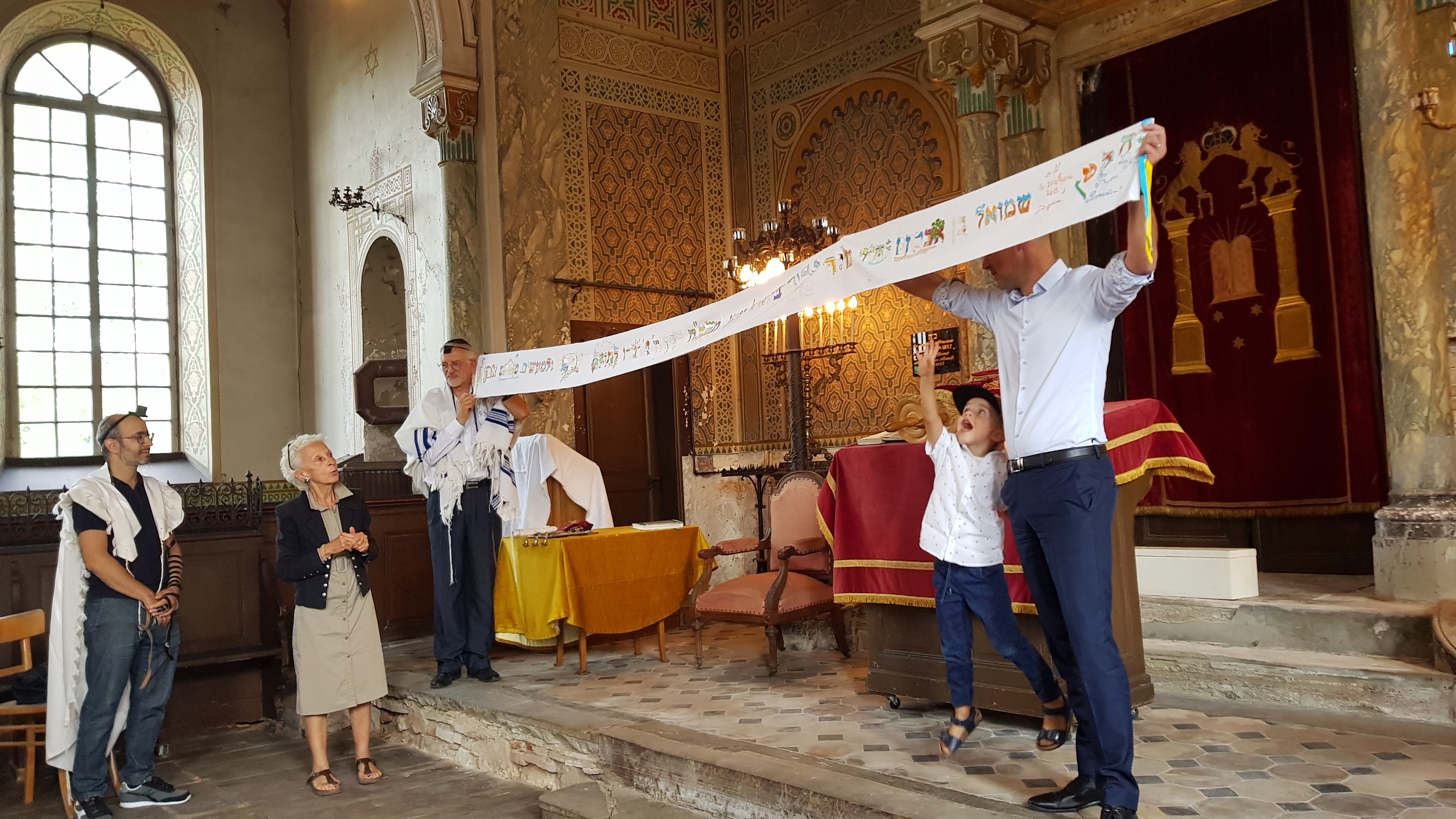
Old mappot have been preserved in the collections of Jewish museums there and elsewhere in the world. However, it seems that the tradition has only remained alive in Alsace, where it continues to be practised by families of Ashkenazi Jewish tradition. Some fathers or grandfathers still make the mappa for their sons or grandsons themselves. Other families prefer to commission an artist to create the mappah. Traditionally, the mappah ceremony takes place on Shabbat morning, but it can also be held on a weekday during a Torah reading in front of the community. The mappah is made from the circumcision cloth by cutting it into four equal-sized pieces, which are sewn together to form a band three to four metres long. The Hebrew text inscribed on the mappah (from right to left) successively indicates the child’s name, the name of their father, and their date of birth in the Hebrew calendar. The text then contains a formula invoking a favourable life for the boy, so that he may grow up to study the Torah, get married and perform good deeds. The text is illustrated by paintings or embroidered designs. These drawings illuminate the Hebrew letters and can also depict characteristics specific to the family, its city or its origins. A mappah by the painter Ruth Brun can be seen on https://www.youtube.com/watch?v=4HNESKkFHEM&t=1s