3 July 2026
Eating Challah on Shabbat?
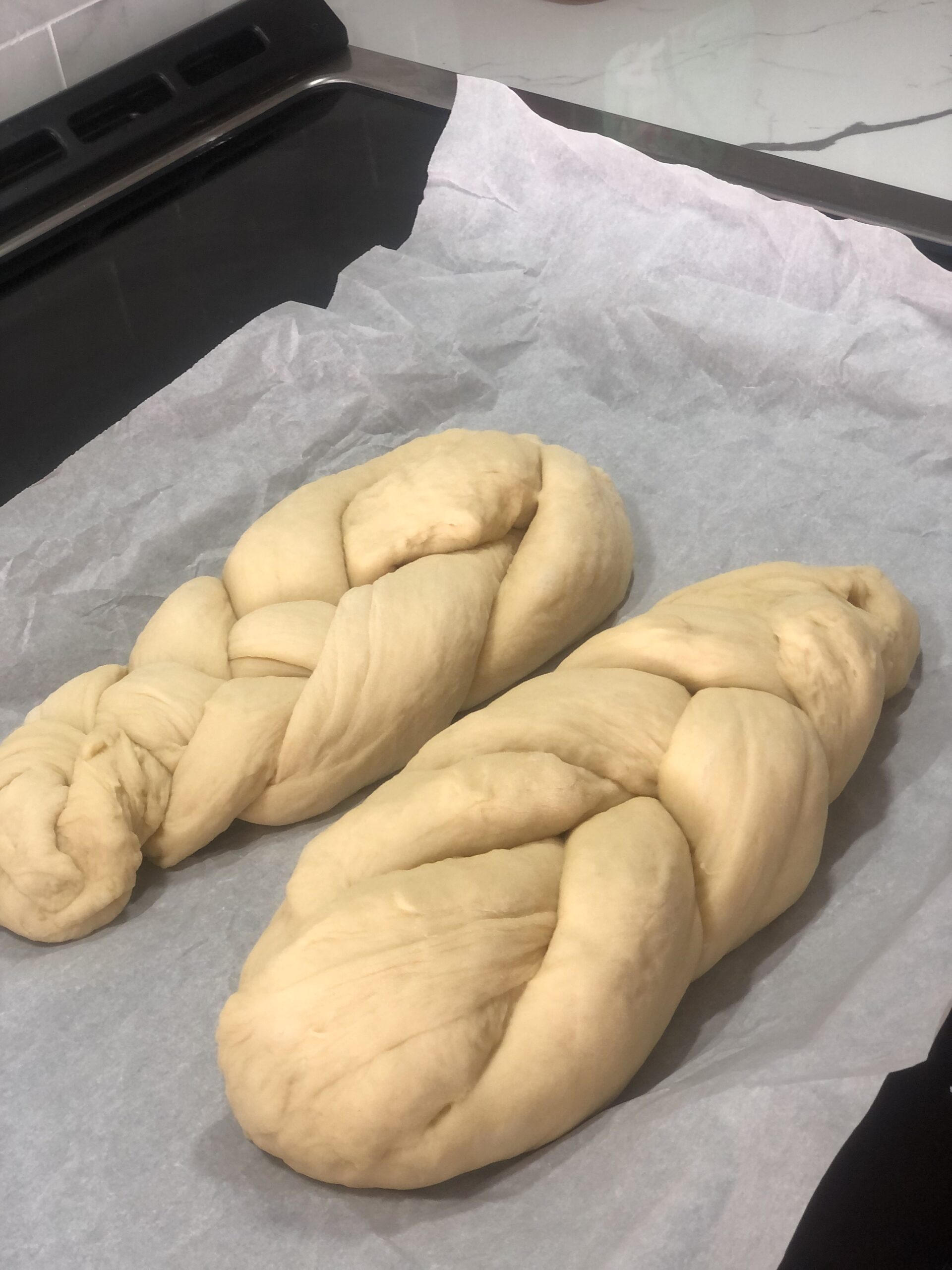
Jews eat challah on Shabbat to honor the holiness of the day and commemorate the double portion of manna that, according to the Bible, God provided to the Israelites in the desert before the Sabbath, so that no gathering of food would be necessary on the day of rest. The two loaves placed on the Shabbat table symbolize this double portion and express gratitude, blessing, and the joy of sharing a festive meal with family and community.
The challah we know today is the result of centuries of cultural exchange and adaptation. The earliest Shabbat loaves were very different from the rich, braided bread that has become a symbol of Jewish tradition. The Hebrew word *challah* itself has ancient roots associated with ideas of roundness, hollowness, and perforation, suggesting that early loaves were likely light, airy breads rather than the enriched bread familiar today.
As Jewish communities settled across Europe, North Africa, and the Middle East, the bread served on Shabbat reflected local baking traditions. Sephardic Jews commonly used the flatbreads of their surrounding cultures, while Ashkenazi communities in Central Europe gradually embraced richer, leavened loaves.
The distinctive braided challah emerged in medieval Germany and Austria, where Jewish bakers adopted a local festive braided bread known as *Berches* (or *Berchisbrod*). They discarded its pre-Christian folklore and transformed it into a bread worthy of the Sabbath table. Early *Berches* was a simple loaf made from white flour, water, and mashed potato, without eggs, earning it the name *vasser challah* (“water challah”) because of its plain texture and mildly tangy flavor.
By the late fifteenth century, the word *challah* was no longer used solely to describe the biblical commandment of separating a portion of dough but had also become the name of the bread itself.
Bibliography / Sources
https://www.myjewishlearning.com/?s=classical+challah