15 May 2026
The Passover Traveller Ritual among Georgian Jews
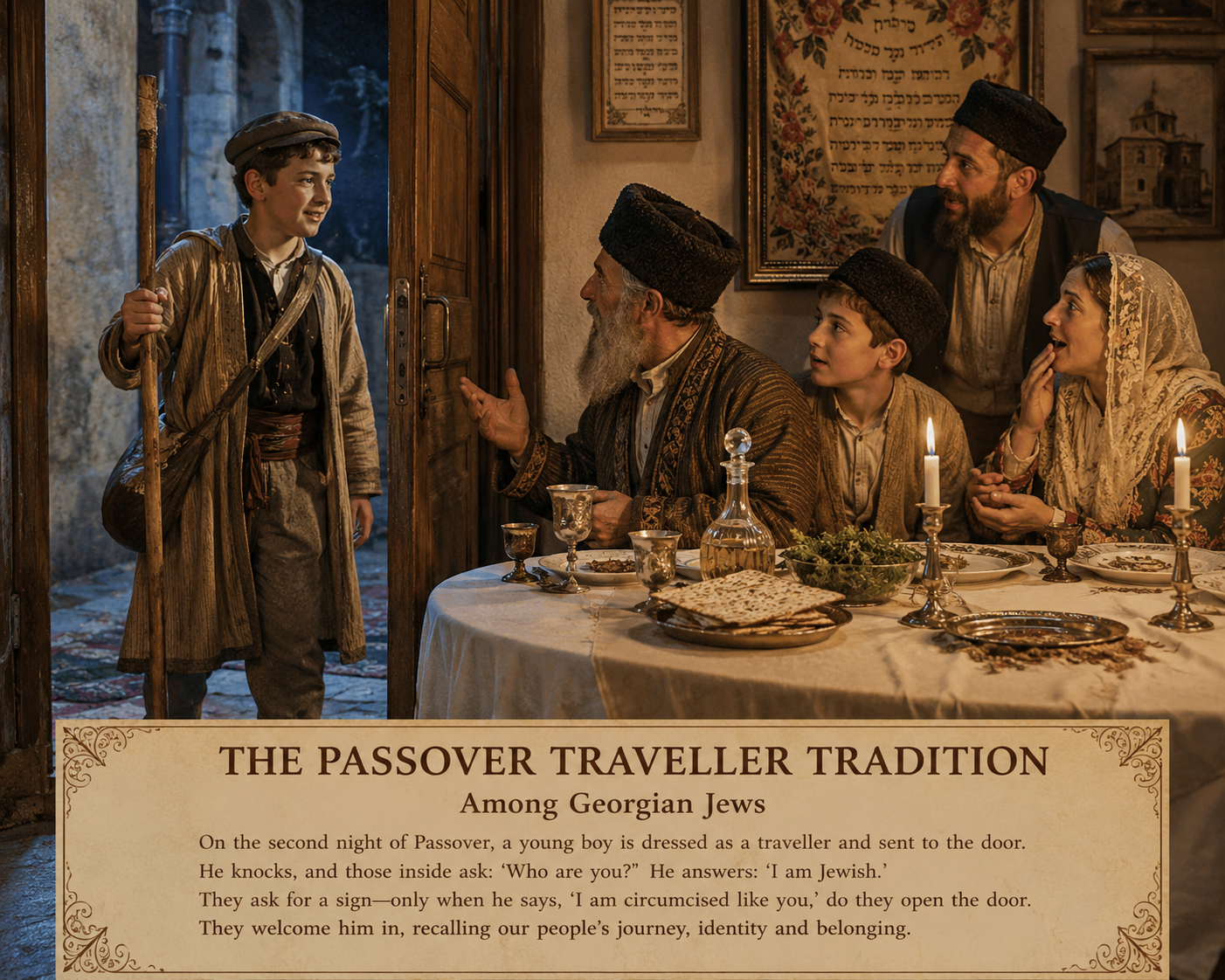
Among the most distinctive Passover traditions of Georgian Jews was a theatrical ritual performed on the second night of the holiday, especially in Kutaisi and other regions such as Breti and Tskhinvali. During the celebration, a young boy was dressed as a traveller and sent outside the house. He would knock on the door while those gathered around the Passover table questioned him about his identity. The boy answered that he was Jewish, but the people inside demanded proof, rejecting several signs until he finally declared, “I am circumcised like you.” Only then was he accepted and invited inside.
The boy would explain that he had travelled from Jerusalem or Egypt and had arrived late on the road during the Feast of Matzah. When the door was finally opened, the family would see him dressed as a wandering traveller with a staff in his hand, often provoking laughter and celebration. This dramatic reenactment symbolized exile, wandering, and belonging to the Jewish people, while also transforming the Passover ritual into a communal and participatory performance.
The custom reflects the strong oral and performative character of Georgian Jewish religious life, where biblical memory and collective identity were preserved not only through prayer and text, but also through dramatic ritual acts passed down across generations.