8 February 2026
Grandma’s Bukharian Manti by Lena Bakman
Based on my memories, made my modern style.
Manti were never an everyday food in my childhood. They were prepared only for special,
festive occasions — because manti meant celebration. When I was growing up in Uzbekistan, my grandmother had a very tall manti pot, much higher than any regular pot. At the bottom, she poured water, and above it she stacked round perforated trays, lightly oiled. On each tray, she arranged the filled manti, closed the pot tightly with a lid and steamed them for 40–45 minutes. Manti are large Central Asian steamed dumplings, traditionally filled with meat and onion. They may remind you of dim sum dumplings, except that manti are noticeably larger and heartier. My grandmother prepared everything by hand. She finely chopped the meat with a knife, mixed it with onion, salt, black pepper and cumin.
The dough was as simple as it gets: flour, water and salt — no eggs. She rolled the dough with a long wooden rolling pin, extremely thin without tearing it. I still use one of her rolling pins, now more than fifty years old (Yes, back in the day they used to produce sustainable products that serve you for life). I simply divide the dough into smaller portions and work gradually.
In my modern kitchen, I keep the tradition — but simplify the process:
Filling (proportions around 65% meat / 35% onion):
● 500 g ground beef
● 200 g onion, very finely chopped
● 2–3 tbsp cold water
● 1 tbsp neutral oil
● Salt, to taste
● Freshly ground black pepper
● Ground cumin
● I also add turmeric powder
Mix gently until combined.
The filling should be juicy, not wet.
Let it rest for 15 minutes before shaping.
Dough (the original recipe includes only white flour, I like spelt flour, so I combine as
follows):
● 340 g white flour (Type 405)
● 145 g spelt flour (Type 630)
● 9 g salt
● 210–225 ml warm water (to dissolve the salt in it)
Knead until smooth:
● By hand: 10–12 minutes
or
● With a machine: 7–8 minutes, then 1 minute by hand
Form into a ball, cover, and let rest covered with a towel, for 30–45 minutes. Resting is essential for elasticity.
Rolling & Shaping:
Roll the dough as thin as possible, almost translucent.
Cut circles 10–12 cm in diameter.
Place a generous tablespoon of filling in the center.
Bukharian folding — a learned skill:
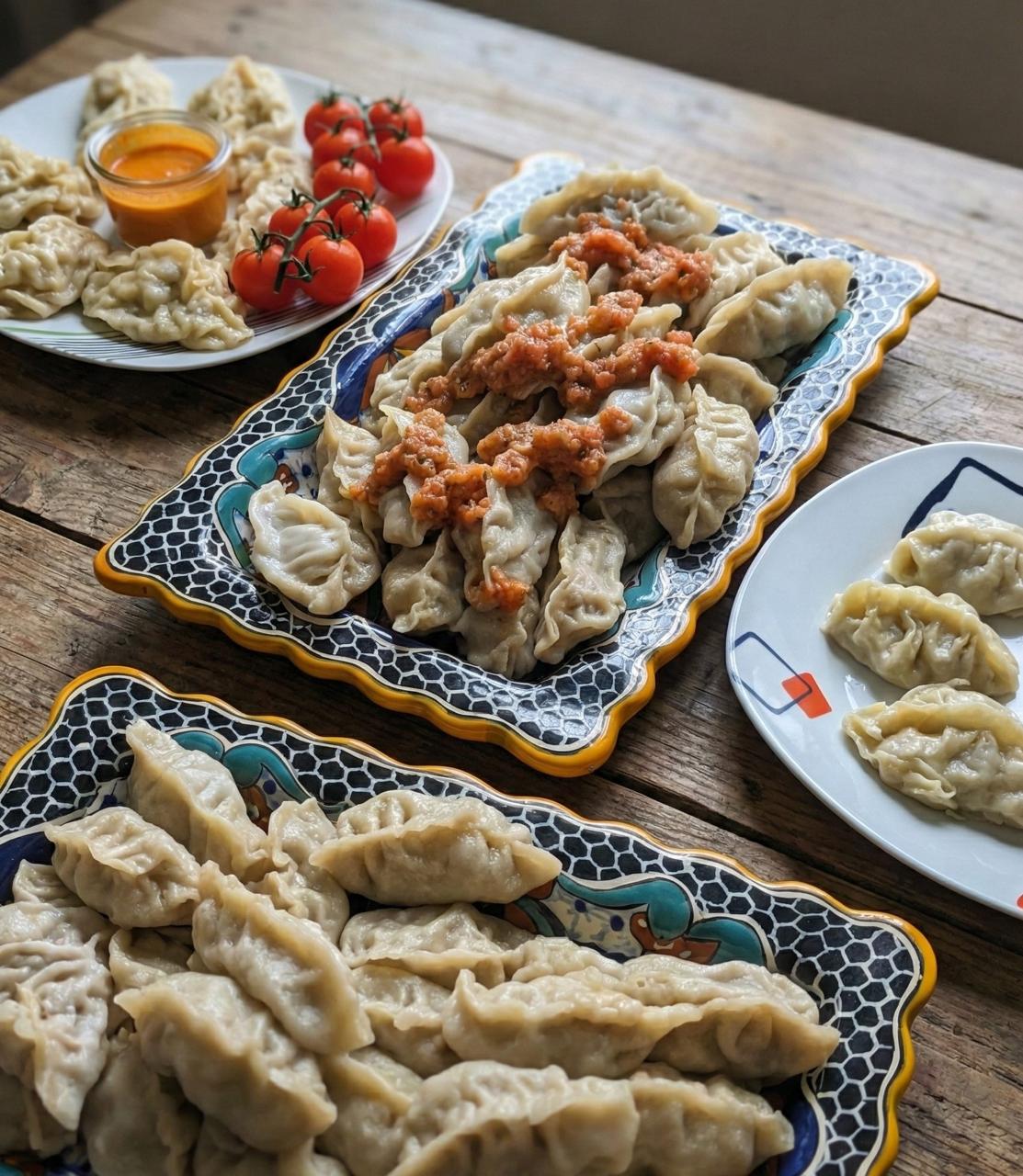
This is the folding method my grandmother taught me — and the part I always struggled with. Bukharian folding is slightly complex and almost artistic. It requires rhythm, finger strength, and patience. You seal the dough gradually from one end to the other, using the index finger to pinch, the middle finger for support, and the thumb to guide the fold. For years, I never felt I truly mastered it, and even now it remains a technique that demands full attention.
The finished manti are elongated and oval. The Uzbek folding style is a simpler method, producing a rounder shape, and is just as beautiful.
Steaming:
Traditionally, manti are steamed in a dedicated tall manti pot. In my kitchen, I use a 3-layer steaming machine.
Lightly oil the perforated trays, arrange the manti with space between them, cover, and steam over boiling water for 40–45 minutes, until the dough is tender and the filling juicy.
Serving:
Traditionally served with a fresh tomato salad. I served mine with chopped tomatoes mixed with an eggplant spread (the spread has its own recipe and video in my Instagram channel). My grandmother finished the manti by sprinkling a little oil and freshly ground black pepper on top before serving. This dish is my way of carrying her kitchen into mine — tradition translated into a modern home.
The video, where I make the Manti, is also available on my dedicated Instagram channel for “My Traditional Modern Kitchen”.