3 March 2026
Illustrated ketubot
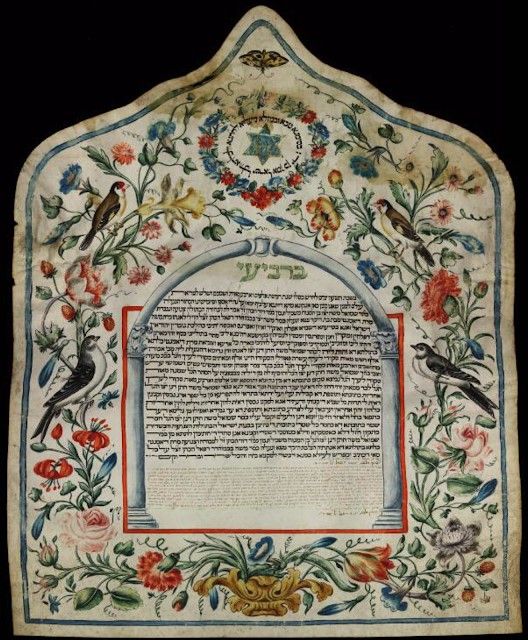
The illustrated ketubah is a decorated Jewish marriage contract that combines legal text, calligraphy and ornamental design. Rooted in late antique rabbinic law and flourishing artistically from the medieval period onward, particularly in Italy, the Ottoman Empire and North Africa, the ketubah became both a binding legal document and an object of visual craftsmanship.
Artisans developed distinctive regional styles incorporating floral motifs, architectural frames, biblical imagery and symbolic representations of Jerusalem. The production process requires knowledge of Hebrew legal formulae, calligraphic technique, layout composition and decorative methods using ink, pigments and sometimes gold leaf.
Traditionally commissioned for weddings and displayed in the couple’s home, the ketubah reflects communal aesthetics, social status and local artistic vocabulary. The craft is transmitted through apprenticeship, artistic training and community demand, adapting to contemporary artistic trends while preserving core textual structure. Today, illustrated ketubot continue to be produced worldwide, demonstrating the dynamic continuity of Jewish ritual craftsmanship and its capacity to integrate legal tradition with artistic expression.