3 March 2026
Dining at Chinese Restaurants on Christmas Day: A Contemporary Jewish Urban Tradition
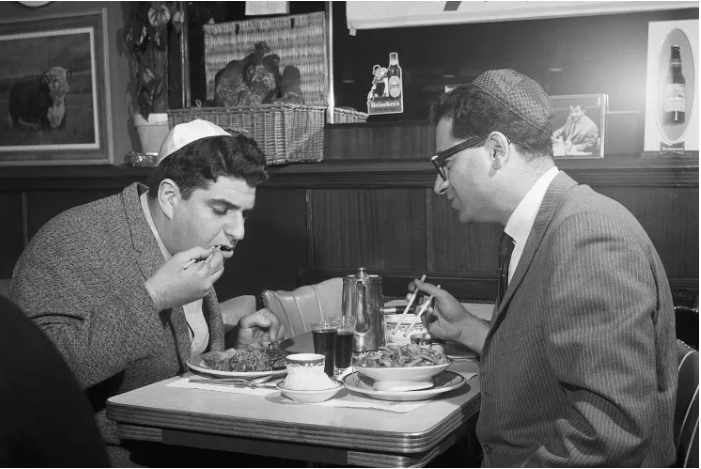
The custom of Jewish families dining at Chinese restaurants on Christmas Day developed in major American cities in the early twentieth century, particularly in New York, where Jewish and Chinese immigrant communities lived in close proximity. As Christmas was not a religious holiday for Jews and most restaurants were closed, Chinese establishments—often open and culturally neutral spaces—became a natural gathering place.
Over time, the practice evolved from convenience into communal tradition. It represents urban coexistence between minority communities, culinary adaptation and the negotiation of cultural difference within majority Christian societies. The absence of dairy-meat mixing in many Chinese dishes also made them relatively compatible with kosher-style eating, further facilitating the custom.
Today, the tradition persists across the United States and has spread to Jewish communities in Europe and elsewhere. It functions as a social ritual marking difference while fostering inclusion, reinforcing family bonds and shared humor about minority identity. As a contemporary intangible heritage practice, it illustrates how traditions emerge organically from social context and are transmitted through repetition, storytelling and collective memory