1 April 2026
Shiri Bili Tria Poni: a Jewish Polish family tongue twister across generations
“Shiri bili tria poni” is a Jewish-Polish tongue-twister passed down in my family from my great-grandmother’s second husband, Tzvi. It was never just a playful rhyme. We recited it during intimate family celebrations, especially at Passover seders and Rosh Hashanah dinners, almost as if it were part of the ritual itself, somewhere between humor and liturgy.
The version we inherited sounds like this:
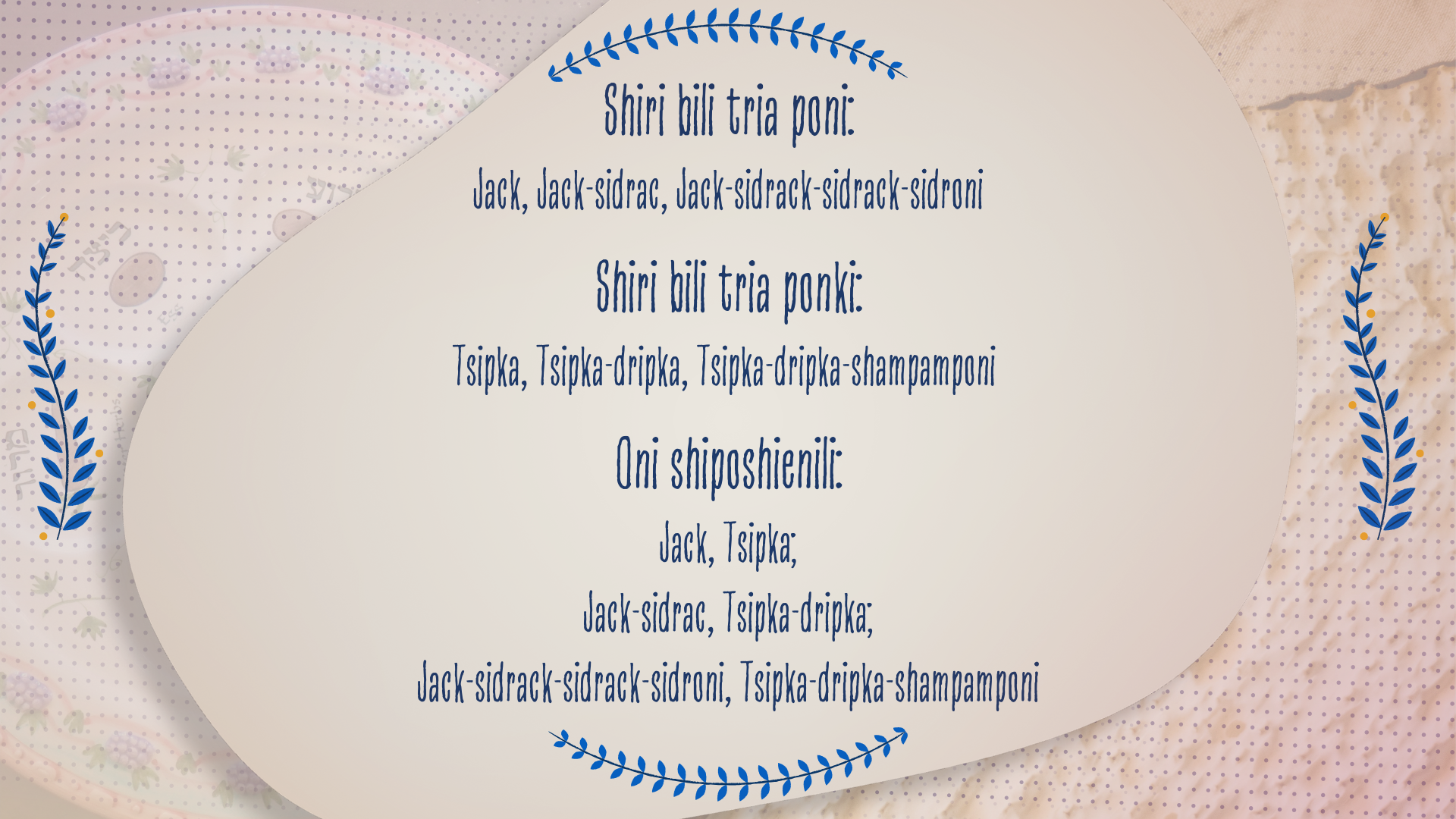
“Shiri bili tria poni: Jack, Jack-sidrac, Jack-sidrack sidrack sidroni.
Shiri bili tria ponki: Tsipka, Tsipka-dripka, Tsipka-dripka shampamponi.
Oni shiposhienili:
Jack, Tsipka; Jack-sidrac, Tsipka-dripka; Jack-sidrack sidrack sidroni, Tsipka-dripka Shampamponi!”
For generations, it was understood as a Jewish tongue-twister from Poland, even though no one fully understood its meaning. When shared with Polish speakers, it was usually dismissed as nonsense.
Only recently, through a chance encounter with colleagues from Warsaw, we discovered that it is in fact a transformed version of a real Polish rhyme: “Byli sobie trzej Japoni.” What had been preserved was not accuracy, but rhythm, structure, and a sense of belonging.
As the rhyme traveled from Poland to Israel, then to Argentina and Spain, it changed. It lost linguistic precision but gained new meaning within a Jewish family context, becoming a living example of how traditions evolve through migration. In this sense, it is not only a memory, but a small archive of movement, language, and identity.